Google Chrome silently downloads 4GB AI model to your computer
Security researcher Alexander Hanff wrote an article on this that privacy guyExplaining how they discovered that Chrome was writing 4GB of on-device AI models to a new folder called weights.bin. This file is related to Gemini Nano, Google’s local language model for devices. This AI model is not an optional download, Chrome installs it automatically without asking for explicit permission from the user. That’s the first problem, why isn’t it opt-in?
Next, what does this AI model do? according to a Help page on Google’s websiteThe on-device generative AI model allows Chrome to perform AI-powered tasks on computers. These include functions related to writing or rewriting text, warning users about scams, summarizing web pages, and organizing tabs.
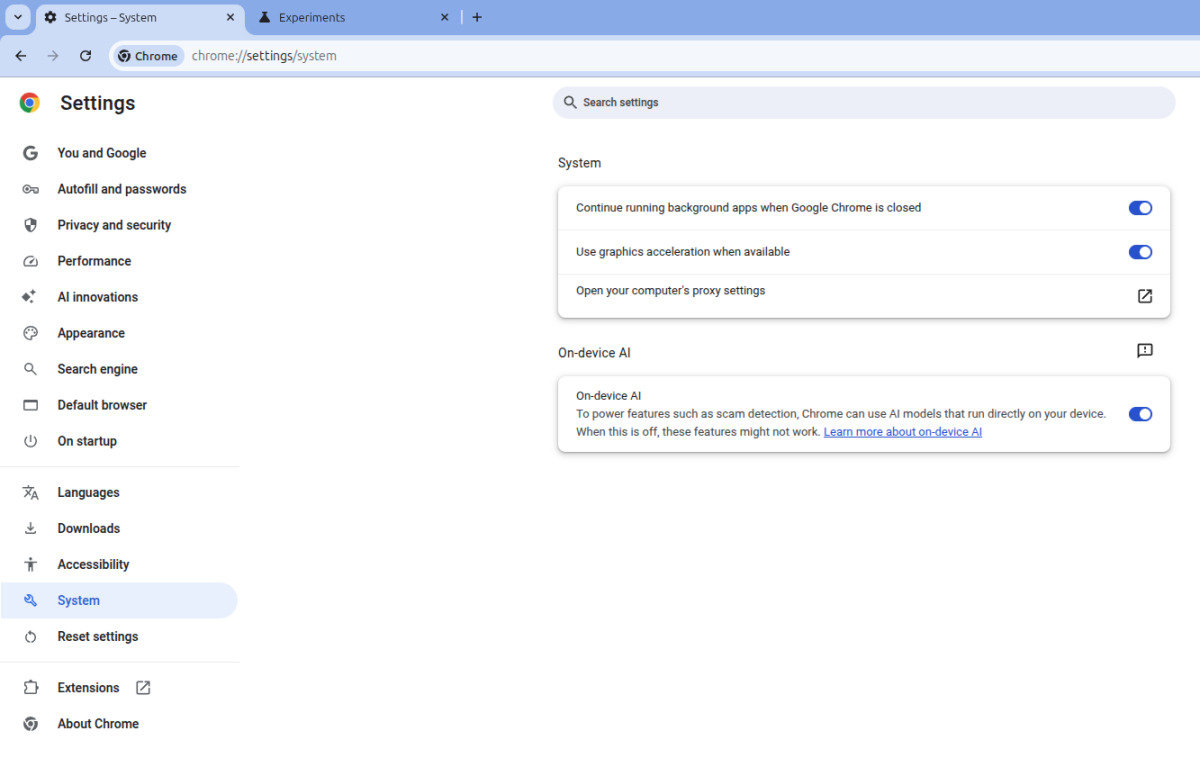
There is an option related to AI models in the System page under Chrome’s Settings. You can also open it in a tab chrome://settings/system. The last option on this page is a setting labeled On-Device AI.
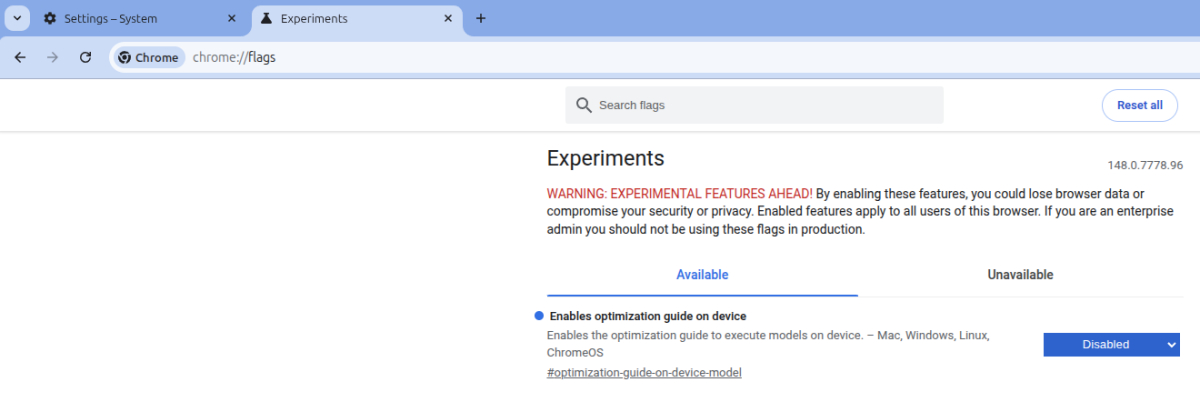
If you don’t want to use AI, you can disable the option. However, users report that turning off the setting does not remove the 4GB AI model from their computer. To do this, open chrome://flags and search for “optimization guides on device”, this will filter the results to show flags related to your query. Click the drop-down menu to set it to “Disabled”, restart Chrome for the change to take effect.
Some users say they were able to find the 4GB AI model stored in the following folder on Windows: AppData/Local/Google/Chrome/UserData/OptGuidOnDeviceModel. Linux users can find the directory in their .config folder like /home/USERNAME/.config/google-chrome/OptGuideOnDeviceModel
Some users claim that Chrome re-downloads the AI models even if you delete the folder, but this issue is resolved when the above flag is disabled.
Nintendo Switch 2 prices are rising
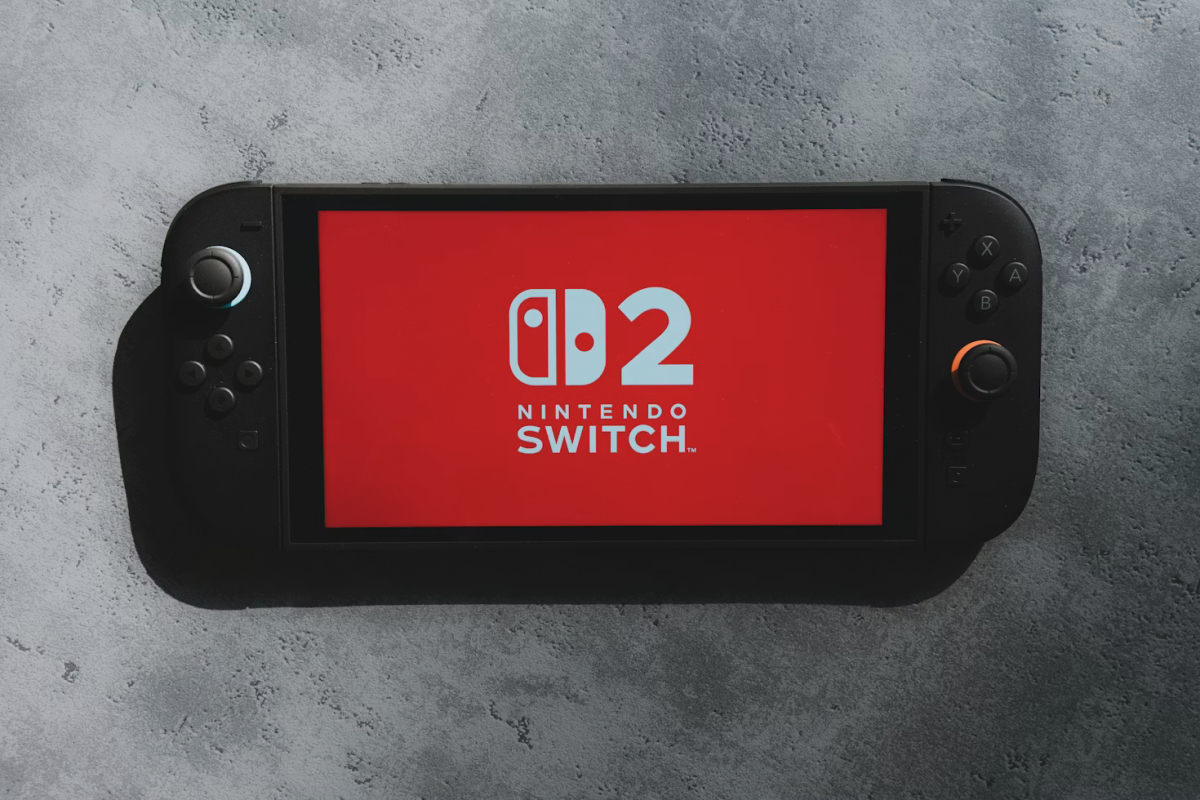
Nintendo has announced That he is raising the price of the Switch 2 worldwide. The handheld console is currently priced at 49,980 Yen in Japan, $449.99 in the US, $629.99 in Canada, €469.99 in Europe. These prices are rising to 59,980 yen, $499.99 USD, $679.99 CAD, and €499.99 respectively. Nintendo says the new prices will go into effect September 1, 2026.
Interestingly, the Japanese video game giant is also raising the prices of the first generation Switch, Switch OLED, and Switch Lite models in Japan. The console prices will increase from May 25, 2026 and will be priced at 47,980 yen, 43,980 yen, and 29,990 yen respectively.
As for the reason for the price increase, Nintendo says it is due to changes in market conditions. This probably refers to the rising costs of RAM, SSD as a result of the ongoing chip shortage crisis. On a side note, Nintendo has also announced star fox 64 remake. epic games’ iOS Store launched in JapanBut it seems to have its fair share of problems.
Firefox’s Nova redesign is now available in the Nightly browser
Mozilla has started testing a new design for Firefox. The redesign, internally called Project Nova, is currently available in the Nightly version of the browser. Rather than completely redesign Firefox, Mozilla has opted to make some subtle changes to the aesthetics. It has rounded elements for the address bar and tabs. Even the buttons on the side bar have a round design.
as seen chip.in, The redesigned Firefox renders web pages in a circular container. This is an interesting approach, especially because it doesn’t change core aspects of the browser.
Users who want to test the new design in Firefox Nightly will need to enable a flag in about:config. Find browser.nova.enabled and set its value to true. A small group of users have criticized the design, but that’s to be expected with any change. If more users provide positive feedback during the testing phase, Mozilla will push the Nova design to the beta channel, and it may eventually make its way to the stable release of Firefox. But it still has a long way to go, so don’t expect a stable version of it in the near future.
Amazon Prime launches Clips, a vertical video feed on the homepage
Disney Plus introduced portrait-form videos in January this year, and Netflix did the same last month. Now, it is Amazon Prime’s turn to follow this trend. Amazon calls its version of vertical video clips. But these videos aren’t like the user-made videos you might find on TikTok or Instagram. Prime Video Clips features short videos from movies and TV shows. It originally debuted with NBA highlights during the 2025–26 season.

Amazon says the Clips experience is designed for phone screens, and tailored to a user’s viewing history. You can access short videos by scrolling down to the Clips carousel on the app’s homepage. In addition to watching clips, users can save titles such as a clip to a watchlist, share it with others, or choose to watch, rent, or purchase an entire title. Clips is being released to select users in the US on Android, iOS, and Fire tablets. It will be available to all users later this summer.
Google releases Snapseed 4.0 for Android and iOS
When Google updated Snapseed to version 3.0 for iOS last year, many users were surprised that the Android app didn’t get the same treatment. However, Google is now releasing the next generation update, i.e. Snapseed 4.0 Simultaneously for Android and iOS. This update comes with many new features. Snapseed has a new UI with a grid on the homepage that displays the photos you’ve edited. Users can tap the Add Photo button to start editing an image. The image editor has three tabs for Looks, Tools and Export. There are many tools that one can use to edit an image.
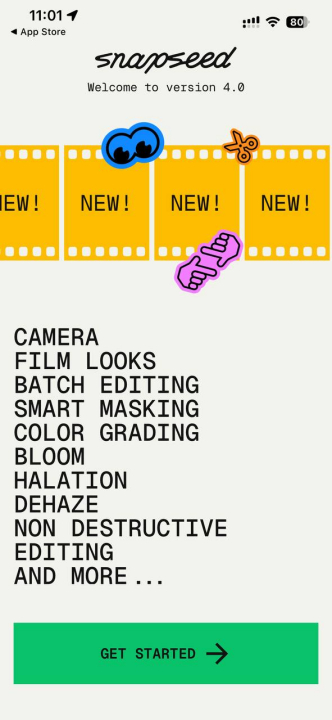
The camera button on Snapseed’s homepage lets users change a number of settings, including filters inspired by real vintage cameras and a Pro mode that allows controlling shutter speed, ISO, focus, and more. Snapseed 4.0 is currently available on the Google Play Store and iOS App Store.